

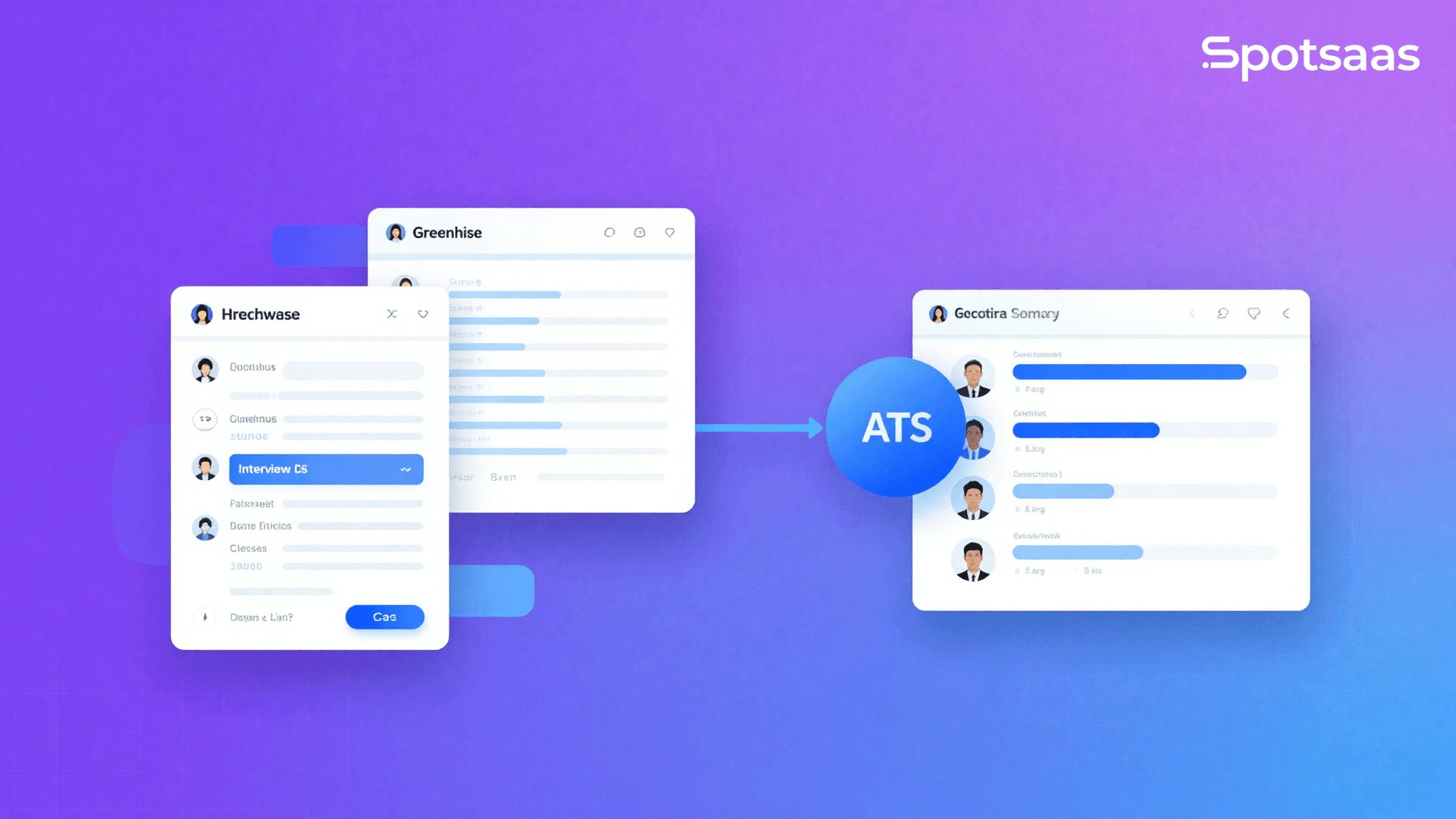
Greenhouse and Lever are two of the most popular applicant tracking systems (ATS) for mid-market and enterprise companies. Both are well-regarded, but they have distinct strengths. This comparison helps you decide which is right for your recruiting team.
Greenhouse vs Lever: Quick Comparison
| Factor | Greenhouse | Lever |
|---|---|---|
| Best For | High-volume, structured hiring | Relationship-based, pipeline recruiting |
| Company Size | 100–10,000+ employees | 100–5,000 employees |
| Pricing | Custom (typically $6,000–$25,000+/year) | Custom (typically $4,000–$15,000+/year) |
| CRM Features | Moderate | Strong (built-in CRM for nurturing) |
| Structured Interviews | Best-in-class | Good |
| Analytics | Excellent | Good |
| Integrations | 500+ (open API) | 300+ integrations |
| Ease of Use | Good (more complex setup) | Excellent |
Pricing shown is approximate; check vendor websites for current rates.
Core ATS Features
Pipeline Management
Greenhouse uses a highly structured pipeline model with configurable stages, scorecards, and approval workflows. Every stage can have required fields, mandatory interview kits, and automated actions. This structure ensures consistent, bias-reduced hiring processes across thousands of reqs simultaneously.
Lever combines ATS and CRM in a single product (LeverTRM — Talent Relationship Management). Pipelines are visual and flexible. Lever excels at nurturing candidates over time with automated email sequences, even before they apply.
Interview Scheduling and Scorecards
Greenhouse is the industry benchmark for structured interviewing. Interview kits define exact questions for each stage. Scorecards capture structured feedback per attribute. Panel interviews can be configured with specific question assignments per interviewer. This is why engineering-heavy companies often prefer Greenhouse.
Lever has good interview scheduling (including bi-directional calendar sync and self-scheduling for candidates) and feedback forms, but less granular scorecard customization than Greenhouse.
Candidate Sourcing and CRM
Lever’s CRM capabilities are a key differentiator. LeverTRM lets recruiters build talent pools, send nurture campaigns to passive candidates, track relationship history, and score candidate potential — all without requiring a separate CRM tool. For proactive sourcing-heavy teams, this is valuable.
Greenhouse has CRM features (Greenhouse CRM module) but it’s historically been more focused on active candidates. The sourcing and nurturing workflow isn’t as native as Lever’s.
Analytics and Reporting
Greenhouse offers extensive recruiting analytics — time-to-hire, source effectiveness, funnel conversion rates, offer acceptance rates, DEI reporting, and interviewer performance data. The data is granular and actionable for TA leaders managing large pipelines.
Lever has solid reporting for pipeline metrics, source tracking, and diversity data. Less customizable than Greenhouse’s reporting for complex analytics use cases, but sufficient for most teams.
Integrations
Greenhouse integrates with 500+ tools including all major HRIS systems (Workday, BambooHR, UKG), background check providers, assessment tools, job boards, and productivity suites. The open API enables custom integrations.
Lever connects to 300+ integrations. Key integrations with LinkedIn Recruiter, Slack, Google/Microsoft calendars, HRIS systems, and background check providers are all available.
Candidate Experience
Both platforms offer career site builders, mobile-optimized application flows, and candidate status communications. Lever’s self-scheduling for interviews is particularly well-reviewed for candidate experience. Greenhouse’s application process can be customized extensively with multi-stage applications.
Who Should Choose Greenhouse?
- High-volume hiring teams (50+ reqs at any given time)
- Companies prioritizing structured, bias-reduced interviewing
- Organizations with complex approval workflows and compliance requirements
- Engineering-heavy companies where technical interview consistency matters
- Enterprise companies needing deep HRIS integration
Who Should Choose Lever?
- Teams that do significant passive candidate outreach and sourcing
- Companies wanting CRM + ATS in a single platform
- Recruiting teams focused on relationship-based hiring
- Mid-size companies (100–1,000 employees) that find Greenhouse overly complex
- Teams that prioritize ease of use and quick recruiter adoption
Our Verdict
For structured, high-volume hiring at enterprise scale, Greenhouse is the stronger platform. For teams that do proactive sourcing, relationship nurturing, and want an easier-to-use combined CRM + ATS, Lever wins.
Both are excellent products. The choice often comes down to: Do you primarily need structured process control (Greenhouse) or proactive talent relationship management (Lever)?
See our Best ATS Software Guide 2026 and HR Software Buyer’s Guide for more options.
Greenhouse vs Lever: Where the Real Difference Sits
Quick Answer: Greenhouse is built around structured hiring — defined interview kits, scorecards and a process designed to make decisions comparable. Lever combines applicant tracking with candidate relationship management, so sourced prospects and past candidates live alongside active applicants. Structure versus relationship is the actual choice.
That difference determines which one fits how you hire, not which is better. If your problem is that interviews are inconsistent and hiring decisions are hard to defend, Greenhouse’s scorecards and kits address it directly. If your problem is that good candidates from previous roles are effectively lost, Lever’s CRM side addresses that instead.
Both are priced for mid-market and enterprise and both quote, not publish, so the cost comparison requires written quotes at your own headcount and hiring volume. Neither is a realistic option for a company making a handful of hires a year.
Choosing Between Them
Choose Greenhouse if
You hire at volume across multiple teams, need interview consistency you can evidence, and want reporting that stands up to scrutiny. Its structured-hiring model is the most developed in the category.
Choose Lever if
You hire the same roles repeatedly, do meaningful outbound sourcing, and want past candidates to remain searchable, not filed against closed requisitions. The CRM capability is what you are paying for.
If neither fits because your hiring volume is lower than both assume, our comparison of applicant tracking system examples by type covers options built for smaller teams.
What Both Platforms Assume About Your Hiring
Greenhouse and Lever are both built for organisations where hiring is continuous, not occasional, and that assumption shapes everything. Both expect defined hiring stages, named interviewers, and someone whose job includes maintaining the process. A company hiring six people a year will find that overhead exceeds the benefit.
They also assume hiring managers participate in the system rather than around it. Structured scorecards only produce comparable decisions if managers complete them, and both platforms lose most of their value where feedback arrives verbally. Before choosing either, it is worth being honest about whether your managers will do that.
Alternatives Worth Considering
If the process overhead is more than you need, Workable covers structured hiring with less configuration, Teamtailor leads on employer branding and careers pages, and JazzHR and Breezy HR price predictably for smaller teams. All four assume less about your process maturity.
For agencies rather than in-house teams, neither Greenhouse nor Lever is appropriate — Recruiterflow and similar tools model clients and placements, which in-house platforms do not.
Frequently Asked Questions
How much does Greenhouse cost?
Greenhouse pricing is custom but typically ranges from $6,000 to $25,000+ per year depending on company size and modules. Pricing is per requisition seat or employee count depending on the plan.
Does Lever include a CRM?
Yes — Lever’s product is called LeverTRM (Talent Relationship Management), which combines ATS and CRM capabilities. You can nurture passive candidates with email sequences, build talent pools, and track relationship history all in one platform.
Is Greenhouse or Lever better for diversity hiring?
Both platforms support DEI initiatives. Greenhouse has more configurable diversity data collection and structured interviewing features (consistent scorecards, anonymized candidate review) that are specifically designed to reduce bias. Lever’s diverse pipeline reporting is solid but less configurable.
Is Greenhouse an ATS or a CRM?
Greenhouse is primarily an applicant tracking system built around structured hiring, with some talent-pipeline capability. Lever is the platform in this comparison that combines ATS and CRM more fully, managing sourced prospects alongside active applicants.
What is the difference between Greenhouse and Lever?
Greenhouse emphasises structured hiring — interview kits, scorecards and comparable decisions. Lever emphasises relationships, keeping sourced and past candidates searchable alongside current applicants. Structure versus relationship is the practical distinction.
Which companies use Lever?
Lever is used across technology, professional services and mid-market companies with active sourcing programmes. Both it and Greenhouse concentrate in organisations hiring continuously, not occasionally.
Which ATS do most companies use?
Workable and Greenhouse are among the most widely deployed for in-house recruiting, with Taleo and SAP SuccessFactors common in large enterprises. Wide adoption mainly means recruiters you hire are likely to know the tool already.
Is Greenhouse or Lever better for structured interviews?
Greenhouse. Interview kits, scorecards and defined stages are its core design, not an added feature, which makes consistency easier to enforce and easier to evidence if a decision is questioned.
How much do Greenhouse and Lever cost?
Both quote per organisation based on employee count and hiring volume, and neither publishes rates. Expect pricing aimed at mid-market and enterprise, with implementation typically billed separately from licensing.
Are Greenhouse and Lever good for small businesses?
Generally not. Both are priced and built for continuous hiring at scale. Companies making a handful of hires a year get better value from Zoho Recruit, Breezy HR or JazzHR.
Do Greenhouse and Lever integrate with HR software?
Both integrate with major HRIS platforms so a hired candidate becomes an employee record without re-entry, and both offer wide integration marketplaces. Both maintain native connectors for Workday, BambooHR, ADP and SAP SuccessFactors; anything outside that set is usually a third-party connector you maintain yourself.
Can you migrate from Lever to Greenhouse?
Yes, and vice versa. Migration involves moving candidate records, stage history and interview feedback, and the practical constraint is usually how much historical data is worth carrying, not technical difficulty.
What is a recruiting CRM?
Software managing relationships with people who have not applied — sourced prospects, past candidates and talent pools. It complements an ATS, which manages people who have applied to a specific open role.
Is Lever legitimate?
Yes. Lever is an established applicant tracking and recruiting CRM platform used by mid-market and enterprise companies. Candidates encountering it are seeing a standard hiring system, not anything unusual.
What are the top applicant tracking systems?
Workable, Greenhouse, Lever, JazzHR and Zoho Recruit cover most of the market by adoption. Greenhouse and Lever concentrate at the larger end; Zoho Recruit and JazzHR serve smaller teams.
Does Greenhouse or Lever have better reporting?
Greenhouse is generally stronger on structured hiring analytics — interview consistency, scorecard data and pipeline conversion. Lever reports more usefully on sourcing activity and candidate relationship history.
Which is easier to implement, Greenhouse or Lever?
Both take weeks rather than days, and most of that is configuring hiring stages and interview kits rather than technical setup. Greenhouse typically requires more upfront process definition because structure is its core model.
Do Greenhouse and Lever support sourcing?
Lever more fully, since candidate relationship management is built into the product. Greenhouse supports sourcing but is designed primarily around candidates who have entered a defined hiring process.
What size company uses Greenhouse or Lever?
Both suit organisations hiring continuously, typically from around 200 employees upward. Below that, hiring volume rarely justifies the cost or the process overhead either platform assumes.
Can you use Greenhouse or Lever for agency recruiting?
Neither is designed for it. Agency recruiting needs client and placement management, which in-house platforms do not model. Recruiterflow and Zoho Recruit’s agency mode are built for that instead.
How do interview scorecards work?
Interviewers score defined attributes against the role instead of writing free-text impressions, which makes candidates comparable and decisions defensible. Greenhouse builds its whole process around this.
Is Greenhouse worth the cost for a mid-sized company?
It becomes worthwhile when hiring is continuous and interview consistency matters enough to evidence. Below roughly 200 employees the structure usually exceeds what the hiring volume requires, and lighter platforms deliver most of the benefit.
Does Lever replace a separate sourcing tool?
For most teams, yes. Its candidate relationship management covers outbound sourcing, talent pools and re-engagement of past candidates, which is the work a separate sourcing tool would otherwise handle.
How long do Greenhouse and Lever take to implement?
Typically four to eight weeks, dominated by defining hiring stages, interview kits and scorecards, not technical configuration. Organisations without a documented process should expect the longer end.
What happens to candidate data if you switch ATS?
Candidate records, stage history and interview feedback can generally be exported, though formats vary and some feedback structures do not map cleanly between platforms. Candidate records and stage history export as CSV from both, but scorecard structures do not map cleanly between platforms, so interview history typically arrives flattened into plain text.
Compare alternatives to the tools in this post

- Independent picks for exactly what you just read about
- Matched to your team size & needs
- Vendors don't pay for placement
Step 1 of 4
How big is your team?
We tailor recommendations to companies your size.











Related Articles
Applicant Tracking Software
ATS Tools for Small Teams: Hire Faster and Smarter with Less Effort
Continue reading →
Applicant Tracking Software
How Collaborative ATS Tools Improve Internal Hiring Communication
Continue reading →
Applicant Tracking Software
How To Choose The Best Job Board Software For 2026
Continue reading →
Applicant Tracking Software
Best Tools for Cross-Functional Hiring Across Teams and Departments
Continue reading →